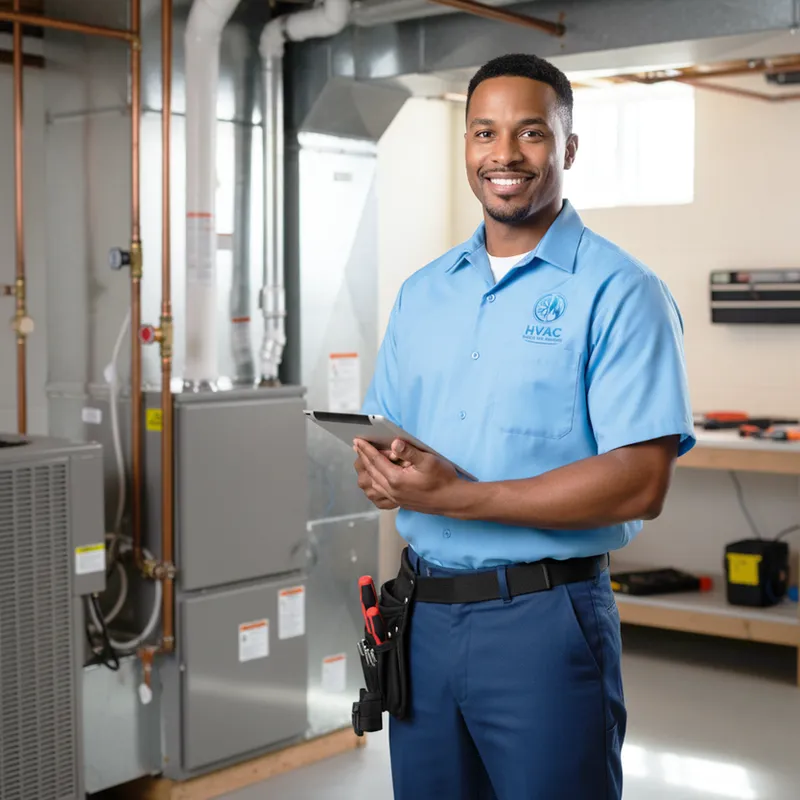
Your HVAC system is the largest mechanical system in your home and one of the most significant financial assets you'll maintain. Like a car, it requires regular attention to perform reliably, efficiently, and safely. Unlike a car, most homeowners have little idea what that maintenance involves — and HVAC companies have a financial incentive not to educate you too thoroughly. This checklist covers every maintenance task, organized by frequency, so you know exactly what to do yourself and what requires a professional.
Monthly Homeowner Tasks
Replace or check the air filter. This is by far the most impactful thing you can do for your HVAC system. A clogged filter restricts airflow, reduces efficiency, strains the blower motor, and can freeze the evaporator coil in summer or overheat the heat exchanger in winter. Filter replacement frequency depends on your filter type (1-inch fiberglass filters: monthly; 1-inch pleated filters: 1-3 months; 4-5 inch media filters: 6-12 months), the presence of pets, and indoor air quality conditions. When in doubt, check monthly and change when visibly dirty.
Inspect outdoor unit for debris. Walk around your outdoor condenser unit and clear any leaves, grass clippings, vines, or debris that has accumulated against or on the unit. Maintain at least 18-24 inches of clearance around all sides. Check that the unit is level — settling can affect drainage and compressor operation.
Check thermostat settings and operation. Verify your thermostat is operating as programmed, holding setpoints accurately, and displaying the correct time. If you have a non-programmable thermostat, consider upgrading to a smart thermostat — the average homeowner saves $140-180 per year from the automatic scheduling alone.
Seasonal Tasks (Spring — Before Cooling Season)
Clean condenser coils. The outdoor condenser coils accumulate dust, pollen, and debris over winter. A dirty condenser dramatically reduces cooling efficiency. Turn off power at the disconnect box, then gently spray coils with water from a garden hose (inside out if possible). Never use a pressure washer — it will damage the delicate fins. If heavy debris is present, call a professional for chemical coil cleaning.
Clear the condensate drain line. Find your condensate drain line (typically a 3/4 inch PVC pipe exiting near the air handler) and pour a cup of diluted white vinegar or condensate drain cleaner solution into the access port. This prevents algae and mold buildup that leads to clogs and water damage. If the drain is already slow, use a wet-dry vac to suction the clog from the exit end of the line.
Test the system before hot weather. Turn on cooling mode in early spring when a mild test is possible. Listen for unusual sounds, check that cold air is coming from all vents, verify temperature differential, and watch the thermostat cycle normally. Catching problems now means scheduling a repair appointment on your terms — not in an emergency during a heat wave.
Seasonal Tasks (Fall — Before Heating Season)
Test the heating system before cold weather. Turn on heat mode in early fall. Furnaces that have sat idle all summer can have accumulated dust that burns off during the first run — this is normal and will stop after a short time. Listen for unusual sounds. If you have a gas furnace, watch for proper burner ignition and verify the pilot light or igniter is functioning. If any burning smell persists beyond the first run of the season, call for inspection.
Check and replace batteries in thermostat and CO detectors. Fall is the time to replace batteries in your thermostat (if applicable) and all carbon monoxide detectors in your home — critical before heating season when combustion appliances are in regular use.
Inspect heat pump defrost operation (if applicable). Heat pumps go through defrost cycles when outdoor temperatures drop near freezing. A thin layer of frost on the outdoor coil is normal during cold weather — the unit will periodically run a defrost cycle to clear it. Heavy ice accumulation that doesn't clear is a problem requiring professional attention.
Annual Tasks (Professional Service)
Annual professional service by a NATE-certified technician should cover:
- Heat exchanger inspection — critical safety check for gas furnaces; a cracked heat exchanger can allow CO into living spaces
- Refrigerant level check — verify proper charge; adjust if low (requires EPA certification)
- Electrical component testing — capacitors, contactors, relays, and wiring connections
- Blower motor inspection and lubrication — bearing wear assessment and lubrication
- Ductwork visual inspection — checking for obvious disconnections, leaks, or damage
- Safety controls testing — limit switches, pressure controls, and safety shutoffs
Schedule your professional tune-up with HVAC Near Me Repair at (888) 392-7512. Our maintenance plans include priority scheduling, bi-annual service visits, and discounts on any repairs identified during service.
Need Expert HVAC Help?
Our NATE-certified technicians are available 24/7 for repair, installation, and maintenance across the United States.
Call (888) 392-7512 Schedule Service